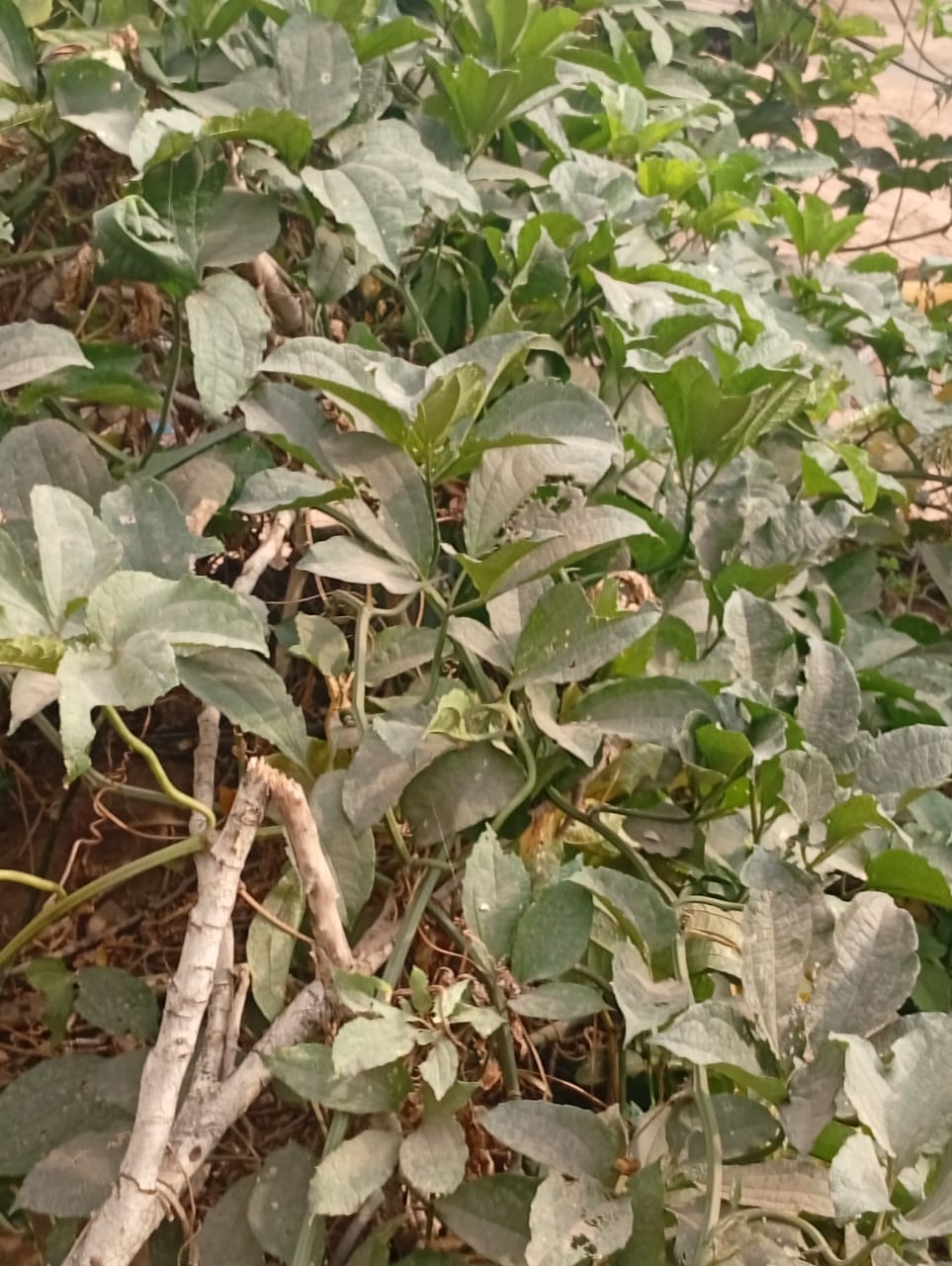



Response of Fluted Pumpkin (Telfairia occidentalis Hook. F) to Wood Ash Rates in An Ultisol, Southeastern Nigeria
Main Article Content
Janet Oliver Orji
Angus Onwudiwe Ikeh
Alice Nnenna Amanze
Background: Fluted pumpkin is a major leafy vegetable widely cultivated and consumed in Nigeria and other rainforest ecological zones of West and Central Africa. The cultivation of this crop faces challenges due to the low soil fertility of the ultisols found in southeastern Nigeria, making it difficult for farmers in the region to achieve bumper harvests of both foliage and pods.
Aims: The experiment aimed to evaluate the response of fluted pumpkin (Telfaria occidentalis Hook. F) to varying rates of wood ash application in ultisol soils. This study seeks to determine the optimal wood ash level that improves soil fertility and enhances the growth and yield of fluted pumpkin, thereby providing sustainable agricultural practices for farmers in southeastern Nigeria.
Methods: The field experiment was conducted to evaluate the effect of wood ash application on growth and yield of fluted pumpkin (Telfaria occidentalis Hook. F). The experimental treatments were four wood (dried oil palm rachis) ash rates; 0, 2, 4 and 6 t/ha. The treatment was laid in a randomized complete block design, replicated four times.
Results: The results showed that the application of wood ash enhanced growth and yield of fluted pumpkin. The treatment of 6t/ha wood ash produced 19.71 t/ha foliar yield. The treatment of 4t/ha produced 18.63 t/ha foliar yield. The least foliar yield, 8.81 t/ha was recorded in the control treatment. Comparing the number of pods per plant, the treatment of 6t/ha wood ash produced significant number of pods per plant; 3.60, followed by 3.43 fluted pumpkin pods per plant recorded in the treatment of 4t/ha wood ash. The least number of pods per plant; 1.12 was recorded in the control treatment. The treatment that received 6t/ha oil palm rachis ash (OPRA) produced 26.81 t/ha pod, followed by 25.01 t/ha recorded in 4t/ha wood ash rate. The least pod yield; 7.44 t/ha was recorded in the control treatment. The study revealed that application of wood ash to fluted pumpkin could assist farmers in achieving bumper harvest in the study area. Farmer in the study area should adopt the application of 4t/ha of wood ash to fluted pumpkin.
Akata, O. R., Essien, O. A., Ben, F. E., & Ikeh, A. O. (2025). Performance of fluted pumpkin (Telfairia occidentalis Hook F.) under different nitrogen fertilizer grades in a high humid ecology of Southern Nigeria. AKSU Journal of Agriculture and Food Sciences, 9 (2), 82-93.
Akata, O. R., Uko, A. E., Nwagwu, F. A., Ndaeyo, N. U., Ikeh, A. O., & Essang, D. M. (2016). Weed dynamics, growth, and yield of cassava (Manihot esculenta Crantz) as influenced by organic fertilizer sources and rates in an Ultisol. Journal of Basic and Applied Research International, 18 (2), 68-76. https://ikprress.org/index.php/JOBARI/article/view/3996
Akpan, E. A., Essien, O. A., Akata, O. R., & Opeolu, E. M. (2024). Effect of oil palm bunch ash and harvesting intervals on okra (Abelmoschus esculentus L.) cultivars in Obio Akpa, Akwa Ibom State, Nigeria. Nigerian Journal of Agriculture, Food and Environment, 20 (1), 21-30.
Ayodele, O. J., & Shittu, O. S. (2014). Fertilizer, lime and manure amendments for Ultisols formed on coastal plain sands of Southern Nigeria. Agriculture, Forestry and Fisheries, 3 (6), 481-488. https://doi.org/10.11648/j.aff.20140306.17
Baloch, S. B., Ali, S., Bernas, J., Moudrý, J., Konvalina, P., Mushtaq, Z., Murindangabo, Y. T., Onyebuchi, E. F., Baloch, F. B., Ahmad, M., Saeed, Q., & Mustafa, A. (2024). Wood ash application for crop production, amelioration of soil acidity and contaminated environments. Chemosphere, 357, 141865. https://doi.org/10.1016/j.chemosphere.2024.141865
Bates, R. A. (1954). Electrometric determination. John Wiley and Sons, Inc.
Black, C. A. (1965). Methods of soil analysis: Agronomy No. Part 2. American Society of Agronomy.
Brady, N. C., & Weil, R. R. (2002). The nature and properties of soils (13th ed.). Pearson Education.
Bray, R. H., & Kurtz, L. T. (1945). Determination of total organic and available forms of phosphorus in soils. Soil Science Journal, 59 (1), 39–45.
Buol, S. W., Southard, R. J., Graham, R. C., & McDaniel, P. A. (2011). Soil genesis and classification.
Holmberg, S. L., & Claesson, T. (2001). Mineralogy of granulated wood ash from a heating plant in Kalmar, Sweden. Environmental Geology, 40, 820–828.
Ibia, T. O. (2005). Forms and content of iron and aluminum in the inland flood plain of South-Eastern Nigeria. Agronomie Africaine Journal, 17 (3), 211–218.
Ibia, T. O., & Udo, E. J. (2009). Guide to fertilizer use for crops in Akwa Ibom State, Nigeria. Uyo: Sibon Books Limited Publisher.
Idem, N. U. A., Ikeh, A. O., Asikpo, N. S., & Udoh, E. I. (2012). Effect of organic and inorganic fertilizer on growth and yield of fluted pumpkin (Telfaria occidentalis. Hook. F) in Uyo, Akwa Ibom State, Nigeria. Nigeria Journal of Agriculture and Social Research, 12 (2), 74-84. https://www.ajol.info/index.php/jasr/article/view/112531
Ikeh, A. O., Apeh, C. C., Orji, J. O., Azmi, Y., Latuponu, H., & Rahmat, A. (2025a). Sustainable groundnut (Arachis hypogaea) cultivation using various soil amendment sources in an Ultisol of Southeastern Nigeria. In Book of Abstracts: International Colloquium on Youth, Environment and Sustainability. Bandung, Indonesia, November 19, 2025.
Ikeh, A. O., Etokeren, U. E., Essien, I. E., Udo, E. A., Ukut, A. N., & Nwanne, A. J. (2017). Effects of crop residue ash application on soil, cowpea yield and economic return to management in Uyo, Niger Delta Region of Nigeria. Journal of Forestry, Environment and Sustainable Development, 3 (1), 154-165.
Ikeh, A. O., Sampson, H. U., Ukabiala, M. E., Anonaba, N. K., Okamigbo, J. N., & Akuwueze, C. G. (2025b). Effect of soil ameliorations on cucumber (Cucumis sativus L.) yield and soil physico-chemical properties in an Ultisol of Southeastern Nigeria. Open Soil Science and Environment, 5 (1), 1-9. https://doi.org/10.33292/ost.vol5no1.2025.146
Ikeh, A. O., Udounang, P. I., Essien, I. E., Etokeren, U. E., & Ndaeyo, N. U. (2016). Response of maize to different crop residue ash sources in acid coastal plain soil of Southeastern Nigeria. Journal of Forestry, Environment and Sustainable Development, 2 (1), 80-87.
Ikeh, A.O., J. O. Orji, J. O., Sampson, H. U., & Akata, O. R. (2023). Effect of Oil Palm Bunch Refuse Ash in Sustainable Production of Egusi-Melon (Colocynthis citrullus) in an Ultisol. Asian Journal of Agricultural and Horticultural Research, 10 (3), pp. 138-148. DOI: 10.9734/AJAHR/2023/v10i324
Juo, A. S. R., & Wilding, L. P. (1996). Soils of the lowland forest of West and Central Africa. In Essays on the ecology of the Guinea Congo rainforest (Proceedings Royal Society of Edinburgh, Vol. 1043, Section B: Biological Science, pp. 15–22). Edinburgh, Scotland, U.K.
Olubode, A. A., Soretire, A., & Adeyemi, N. O. (2017). Influence of organic manure and wood ash on the abundance of soil microorganisms, organic carbon, and grain yield of soybean (Glycine max L. Merrill) in acid soil. Journal of Agricultural Science and Environment, 8 (1 & 2), 87-96.
Onweremadu, E. U. (2007). Characterization of a degraded Ultisol amended with cassava peel, cattle dung, and poultry droppings in Southeastern Nigeria. Journal of Plant Sciences, 2, 564-569. https://doi.org/10.3923/jps.2007.564.569
Pitman, R. M. (2006). Wood ash uses in forestry: A review of the environmental impacts. Journal of Forestry, 79 (5), 563-588.
Sampson, H. U., Ikeh, A. O., Orji, J. O., Uko, U. I., Okparaiheoma, D. A., Akuwueze, C. G., Anonaba, N. K., & Okamigbo, J. N. (2025). Effects of soil amelioration on productivity of okra (Abelmoschus esculentus (L) Moench) in an Ultisol of Southeastern Nigeria. Open Soil Science and Environment, 3 (1). https://doi.org/10.70110/osse.v3i1.33
Janet Oliver Orji , Department of Crop Science, Faculty of Agriculture, University of Agriculture and Environmental Sciences, Umuagwo, Imo State, Nigeria
NIGERIA
Angus Onwudiwe Ikeh , Department of Crop Science, Faculty of Agriculture, University of Agriculture and Environmental Sciences, Umuagwo, Imo State, Nigeria
NIGERIA
Alice Nnenna Amanze , Department of Agricultural Extension, Faculty of Agriculture, University of Agriculture and Environmental Sciences, Umuagwo, Imo State, Nigeria
NIGERIA